
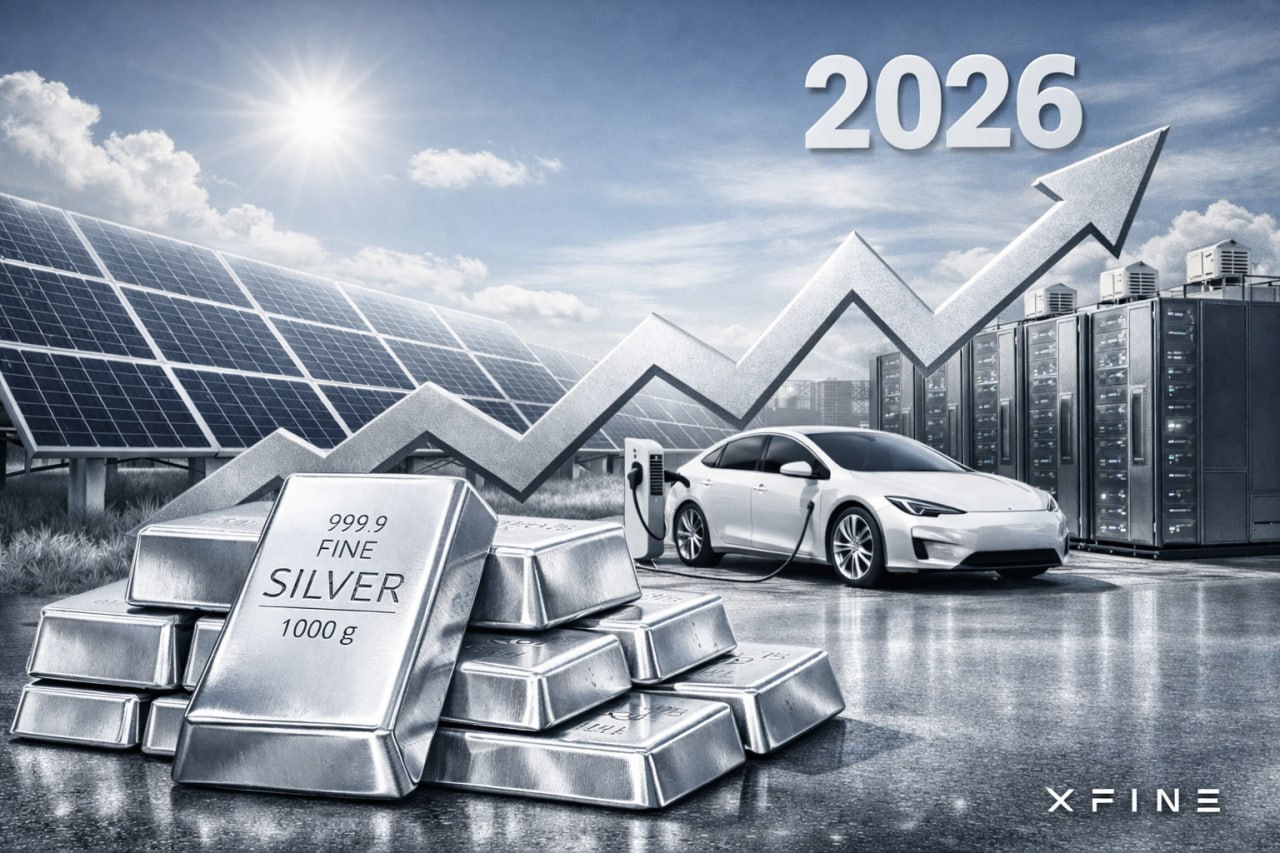
At the end of 2025, XFINE presented a scenario analysis of the silver market for 2026, noting that the white metal is entering a new phase shaped by a rare combination of fundamental factors. After one of the strongest rallies in modern history, silver has firmly secured its position not only as an industrial material but also as a full-fledged investment asset. In 2025, prices reached new all-time highs, rising into the 70-80 dollar per ounce range, while the total annual gain exceeded 150%. This surge was driven by easier monetary policy from leading central banks, rising geopolitical uncertainty, and the acceleration of the global energy transition, all of which significantly expanded demand from both private and institutional investors.
A structural supply deficit remains the market’s key fundamental feature. According to Metal Focus, 2025 marked the fifth consecutive year of a shortage of physical silver, and even in 2026 the deficit is not expected to disappear entirely, despite a possible reduction from around 63.4 to 30.5 million ounces. Demand continues to consistently exceed supply, while global stockpiles remain at low levels, making the market highly sensitive to any additional demand shocks.
Peter Krauth, editor of Silver Stock Investor, has emphasised in comments to Investing News Network that higher prices alone cannot quickly stimulate additional mine supply. Around 70-75% of silver is produced as a by-product of copper, zinc, lead, and gold mining, meaning production decisions depend primarily on conditions in those markets. A further constraint is the long investment cycle: from exploration to the launch of a new mine typically takes 10-15 years. XFINE believes that this supply rigidity significantly increases the likelihood of sharp price movements in 2026.
Growing industrial demand remains the second major pillar of the silver market. According to the Silver Institute, silver is playing an increasingly systemic role in the energy transition, particularly in solar power, electric vehicles, and power electronics. Even though the amount of silver used in individual components is gradually declining, overall production growth continues to push total demand higher. Frank Holmes, CEO of US Global Investors, has previously noted that solar generation is becoming a core element of the energy mix, especially in the United States and Asia, making silver demand less dependent on short-term economic cycles. The expansion of data centres and artificial intelligence infrastructure is also strengthening indirect demand through higher electricity consumption and the continued growth of solar energy.
Investment demand is becoming increasingly important as well. Silver traditionally follows gold but shows higher volatility, which makes it attractive during periods of rising inflation expectations and falling real interest rates. In 2025, inflows into silver-backed ETFs became a key market driver, with total holdings rising by around 18% to more than 840 million ounces. In emerging markets, silver is increasingly viewed as a more affordable alternative to gold. In India, prices for gold above 4,000 dollars per ounce led to a noticeable rise in demand for silver bars and jewellery, further tightening the physical market.
When outlining scenarios for 2026, analysts remain cautious about precise price targets due to silver’s high volatility. Peter Krauth describes 50 dollars per ounce as a new long-term support level and views the 65-70 dollar range as a base-case scenario. More optimistic projections have been voiced by Frank Holmes and Clem Chambers, founder of the analytical platform aNewFN, who suggest that prices could move into the 90-100 dollar range if retail investment demand accelerates. At the same time, XFINE stresses that even potential corrections caused by a slowdown in the global economy are unlikely to change the long-term market balance.
Overall, silver enters 2026 with a combination of constrained supply, rising industrial and investment demand, and a relatively supportive macroeconomic environment. According to XFINE analysts, silver is increasingly seen not simply as a commodity, but as a form of money with limited supply, capable of securing a stable position in long-term investment portfolios while remaining one of the key assets in the precious metals market.


