
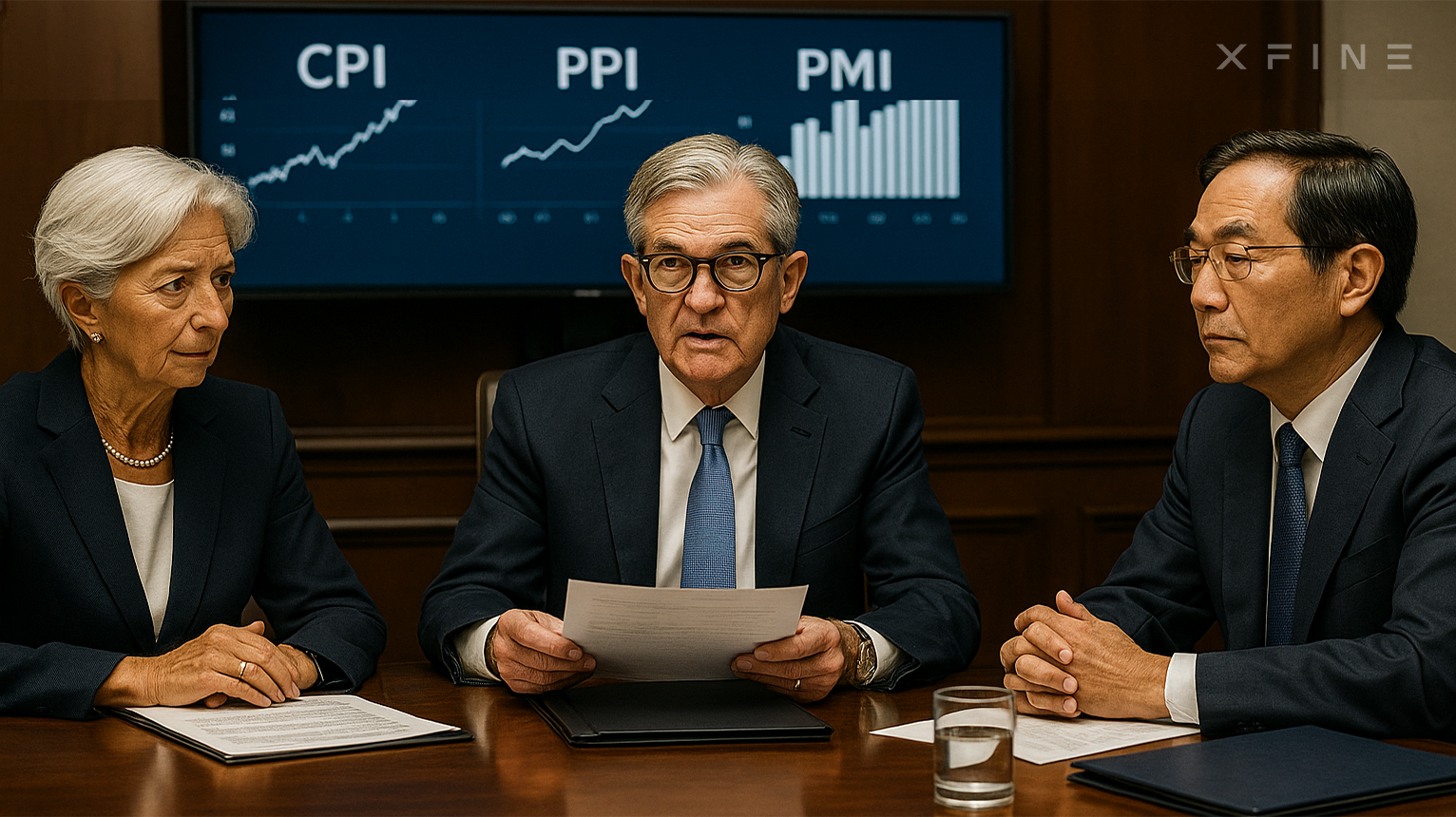
In the financial world, a simple truth is being confirmed ever more often: a trader’s or investor’s success depends not only on the ability to read charts, but also on the capacity to look deeper – to understand which macroeconomic factors actually drive the markets. Working with key indicators comes to the fore, as they allow one to assess inflationary processes, production costs and business activity. Among the wide range of statistics, it is precisely three indicators – CPI, PPI and PMI – that form a kind of fundamental triptych, making it possible to anticipate central-bank actions and build trading strategies based on real economic trends.
CPI, or the Consumer Price Index, is traditionally regarded as the main barometer of inflation. It shows how the cost of goods and services included in the basket of an average consumer is changing. For regulators such as the Federal Reserve and the ECB, this indicator serves as a primary reference point in monetary-policy decisions. When inflation comes in above forecasts, the probability of rate hikes increases, which is immediately reflected in bond yields, currency movements and investor interest in safe-haven assets. Different CPI measures allow the picture to be viewed from various angles: the core index excludes volatile food and energy prices, highlighting long-term trends, while the headline index captures all changes in household spending. As XFINE analysts note, CPI makes it possible to adjust trading models flexibly and adapt to shifts in market cycles.
If CPI reflects the impact of inflation on consumers, the Producer Price Index (PPI) shows what is happening earlier in the chain – at the production level. This indicator is considered leading: rising producer prices almost always translate into higher prices for end consumers. A careful analysis of PPI helps not only to forecast future CPI readings, but also to assess the condition of entire industries. For example, falling raw-material costs support the metals sector, while rising energy expenses reduce industrial profitability. For traders working with CFDs on commodities or industrial stocks, PPI becomes a valuable tool for identifying entry points. At XFINE, it is emphasised that comparing CPI and PPI makes it possible to build more resilient medium-term strategies and reduce the impact of short-term volatility.
The third element of this system is the PMI business activity index. Its uniqueness lies in the fact that it is based on surveys of purchasing managers, who tend to sense changes in supply and demand earlier than others. A reading above 50 points signals economic expansion, while a figure below 50 indicates a slowdown. For markets, PMI is valuable because it allows potential turning points to be identified even before official GDP data are released. It is one of the few indicators that simultaneously reflects the real state of business and offers a forward-looking perspective, which is why its dynamics are taken into account not only by traders but also by central banks when preparing policy decisions.
In practice, the strength of these three indicators lies in their combined use. CPI shows how the consumer is faring, PPI offers a glimpse into the production side of the economy, and PMI reflects business confidence and expectations. Together, they form a coordinate system that helps traders navigate any market environment. These indicators are particularly valuable in periods of uncertainty. When the Federal Reserve is approaching a meeting, markets closely scrutinise the latest CPI and PPI data to assess the likelihood of a rate change. PMI, in turn, helps to determine whether the economy can withstand a tight policy stance or requires support. This combination of indicators shapes market reactions well before official decisions are announced. As XFINE experts point out, it is precisely in such periods that traders who can correctly interpret CPI, PPI and PMI gain a competitive edge – the ability to open positions while others are still trying to understand what is happening. Proper use of these indices transforms trading from a game of chance into a conscious capital-management process, allowing not only risks to be minimised but also steady returns to be achieved over the long term.


